Wednesday, 13 August 2014
How much is the cost to produce a book in Nigeria?
"How much is the cost to produce a book(?)" The cost of producing a book depends on a number of factors e.g. The spine size, editorial service, the cover texture (whether gloss or matt and whether laminated or not) and design of the cover (graphic artist, nos of colours), rectangular size of the book and lot more.

Poem About A Bird
A wise old owl sat on an oak,
The more he saw the less he spoke;
The less he spoke the more he heard;
Why aren't we like that wise old bird?
(Edward H. Richards)
The more he saw the less he spoke;
The less he spoke the more he heard;
Why aren't we like that wise old bird?
(Edward H. Richards)
Mini Author Tour
2 August,2014
I scheduled to be in 4 states with my book. Unleash Your Potential. I left home thinks copies held would be more than enough. Funny that it hardly was enough for Ekiti State even without having to market to anyone. Thanks to all those who called my phone to get theirs. God bless you. Five copies was also donated and gracefully accepted by the Polytechnic Digital Library. A few copies are now available at the popular Hope Faith Bookshop along Ajilosun road, Ado-Ekiti. I arrive Ondo with too little copies hence hid under the guise of my other purpose there without actually promoting my books however some did find out. I'm obliged to get some copies to Bushiro Bookshop Ibadan because there is high demand from Ibadan hence I contacted a friend in Futa (Samuel) who had been helping to promote the book in FUTA. He had few copies left so I collect only five copies to quietly deliver at Ibadan. Would be in Ilesha and Ibadan today though. I regret not moving with all copies available. Author Abegunde Sunday O.
I scheduled to be in 4 states with my book. Unleash Your Potential. I left home thinks copies held would be more than enough. Funny that it hardly was enough for Ekiti State even without having to market to anyone. Thanks to all those who called my phone to get theirs. God bless you. Five copies was also donated and gracefully accepted by the Polytechnic Digital Library. A few copies are now available at the popular Hope Faith Bookshop along Ajilosun road, Ado-Ekiti. I arrive Ondo with too little copies hence hid under the guise of my other purpose there without actually promoting my books however some did find out. I'm obliged to get some copies to Bushiro Bookshop Ibadan because there is high demand from Ibadan hence I contacted a friend in Futa (Samuel) who had been helping to promote the book in FUTA. He had few copies left so I collect only five copies to quietly deliver at Ibadan. Would be in Ilesha and Ibadan today though. I regret not moving with all copies available. Author Abegunde Sunday O.
Monday, 11 August 2014
Call for Participation in SPIC International Online Poetry Challenge
As part of Speaking Pen International Concept (SPIC) Award/Seminar programme scheduled to hold in Lagos, Nigeria by October 2014, poets from Nigeria and abroad are hereby invited to participate in the SPIC Online Poetry Challenge, which commences today: Tuesday, 5th of August, 2014.
There is no restriction to who can participate and to theme of poem to be entered for the challenge, as each poet chances of emerging as a winner is determined by the numbers of likes and comments his or her entry receives on SPIC Facebook page.
Interested poets are thereby expected to submit one of their finest poems to spicteam@gmail.com under a uniform message subject: “Submission for SPIC Online Poetry Challenge” and the message body therein should carry poets’ official name and their individual Facebook account name where appropriate.
Thereafter, they should await a responding mail that will include the link to their poems when posted on our Facebook page. This link will afford each candidate the opportunity to promote his or her work by sharing with friends and fans, and inviting them to like and comment on it.
At the end of the challenge, first, second and third contenders with the highest likes and comments will emerge as winners and will be duly honoured by Speaking Pen International Concept (SPIC) in its forthcoming Award/Seminar programme, in October this year.
So endeavour to be part of this poetic fray by emailing one of your most acclaimed poems (by friends and fans) written in English to this address spicteam@gmail.com so as to stand a chance of being among the winners!
Closing date for all entries is 28 September, 2014.
Signed:
SPIC_Team
There is no restriction to who can participate and to theme of poem to be entered for the challenge, as each poet chances of emerging as a winner is determined by the numbers of likes and comments his or her entry receives on SPIC Facebook page.
Interested poets are thereby expected to submit one of their finest poems to spicteam@gmail.com under a uniform message subject: “Submission for SPIC Online Poetry Challenge” and the message body therein should carry poets’ official name and their individual Facebook account name where appropriate.
Thereafter, they should await a responding mail that will include the link to their poems when posted on our Facebook page. This link will afford each candidate the opportunity to promote his or her work by sharing with friends and fans, and inviting them to like and comment on it.
At the end of the challenge, first, second and third contenders with the highest likes and comments will emerge as winners and will be duly honoured by Speaking Pen International Concept (SPIC) in its forthcoming Award/Seminar programme, in October this year.
So endeavour to be part of this poetic fray by emailing one of your most acclaimed poems (by friends and fans) written in English to this address spicteam@gmail.com so as to stand a chance of being among the winners!
Closing date for all entries is 28 September, 2014.
Signed:
SPIC_Team

Friday, 8 August 2014
GET YOURSELF OUR AWARDS
AWARD CATEGORIES
***
Poet of the Year
Best submission for our Anthology
Best Poem of the Year
Most Consistent Poet
Promising Author of the Year
Best Collaboration of the Year
Motivational Book of the Year
Self-Help Book of the Year
Poetry Book of the Year
Short Story of the Year
Most Loyal fan of SPIC
Outstanding Achiever of the Year
Outstanding Young Achiever
Journalist of the Year
Winners of SPIC Poetry Challenge
***
For you to win one of the SPIC Award, send the following:
1. Name:
2. Age:
3. Location:
4. Categories applied for:
5. Write a short write up not more than 200 words stating your notable achievement and why you deserve the award applied for above
6. The award programme would be held in Lagos, Nigeria by October.
7. Some of the above awards have prizes attached while others are only going to add laurel feather to your cap.
8. Some of the categories would be judged by Facebook likes and comments while others would be strictly on merit alone as adjudged by SPIC team
9. You can also suggest to us any eligible persons known to you
10. Share this. Spread the would as much as you can. Thanks
Send entries to sunnystar247@yahoo.com
***
Poet of the Year
Best submission for our Anthology
Best Poem of the Year
Most Consistent Poet
Promising Author of the Year
Best Collaboration of the Year
Motivational Book of the Year
Self-Help Book of the Year
Poetry Book of the Year
Short Story of the Year
Most Loyal fan of SPIC
Outstanding Achiever of the Year
Outstanding Young Achiever
Journalist of the Year
Winners of SPIC Poetry Challenge
***
For you to win one of the SPIC Award, send the following:
1. Name:
2. Age:
3. Location:
4. Categories applied for:
5. Write a short write up not more than 200 words stating your notable achievement and why you deserve the award applied for above
6. The award programme would be held in Lagos, Nigeria by October.
7. Some of the above awards have prizes attached while others are only going to add laurel feather to your cap.
8. Some of the categories would be judged by Facebook likes and comments while others would be strictly on merit alone as adjudged by SPIC team
9. You can also suggest to us any eligible persons known to you
10. Share this. Spread the would as much as you can. Thanks
Send entries to sunnystar247@yahoo.com
Wednesday, 16 July 2014
MAYA ANGELOU ANTHOLOGY
Posted by hinovelty in Anthology, Book
 The Phenomenal Woman Poetry Collaboration
Again, the world loses yet another sensational figure.
This poetry collaboration is unusual, and we are happily inviting you to be our esteemed contributor. Powered by Hinovelty, this voluntary collaboration is aimed at honouring an outstanding woman who gave the world a reason to always remember her. Are you still guessing who she is? She is the phenomenal Maya Angelou (1928 – 2014).
We are pioneering this poetry anthology titled ‘THE PHENOMENAL WOMAN POETRY COLLABORATION’, to be released in September 2014. We are gladly inviting you to be part of this epoch-making collaboration. What other way to be honoured if not by honouring others?
You have got the rare gift to weave words; it’s time to prove yourself once again. All you just need to do is to pick your pen and write. One poem/essay in honour of Maya Angelou and your name will forever be listed alongside others wherever THE PHENOMENAL WOMAN POETRY COLLABORATION is mentioned.
HOW TO ENTER
It’s simple. Forward your entry to maphenomwoman@gmail.com with THE PHENOMENAL WOMAN as subject. Your entry must include your name and bio (not more than 30 words).
Deadline for submission is 19th July, 2014.
NOTE: Proceeds from this poetry collaboration will be channeled to youth/women empowerment.
Once again immortalize your name by being part of this great collaboration.
For more information call Ifeanyi Enoch Onuoha +2348114363302,
+2348037633034 or Ogwo David Emenike +2347036466412
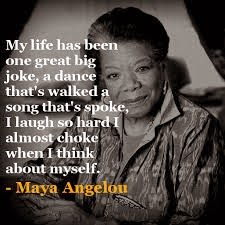
Again, the world loses yet another sensational figure.
This poetry collaboration is unusual, and we are happily inviting you to be our esteemed contributor. Powered by Hinovelty, this voluntary collaboration is aimed at honouring an outstanding woman who gave the world a reason to always remember her. Are you still guessing who she is? She is the phenomenal Maya Angelou (1928 – 2014).
We are pioneering this poetry anthology titled ‘THE PHENOMENAL WOMAN POETRY COLLABORATION’, to be released in September 2014. We are gladly inviting you to be part of this epoch-making collaboration. What other way to be honoured if not by honouring others?
You have got the rare gift to weave words; it’s time to prove yourself once again. All you just need to do is to pick your pen and write. One poem/essay in honour of Maya Angelou and your name will forever be listed alongside others wherever THE PHENOMENAL WOMAN POETRY COLLABORATION is mentioned.
HOW TO ENTER
It’s simple. Forward your entry to maphenomwoman@gmail.com with THE PHENOMENAL WOMAN as subject. Your entry must include your name and bio (not more than 30 words).
Deadline for submission is 19th July, 2014.
NOTE: Proceeds from this poetry collaboration will be channeled to youth/women empowerment.
Once again immortalize your name by being part of this great collaboration.
For more information call Ifeanyi Enoch Onuoha +2348114363302,
+2348037633034 or Ogwo David Emenike +2347036466412
Thursday, 10 July 2014
Messages from poets
We asked several poets two questions: "What is the one technique that makes your work stand out?" and "What is the best piece of writing advice you ever received?" Their answers follow. (For the answers to these questions from fiction writers from Elmore Leonard to Sandra Brown to Richard North Patterson, click here, and from nonfiction writers from Stephen Ambrose to Marya Hornbacher to Jeff Zaslow, click here.)
Laurence Lieberman
Compass of the Dying (University of Arkansas Press)
The Technique: Some time after my first drafts are completed, months or even years, I come back to the material to look for the poems hidden in the handwritten scrawl. I turn to the typewriter when I begin experimenting with forms, usually stanzas employing syllabic or accentual count lines. I never use a computer in working on poems—I want to slow the process down, not speed it up.
The Advice:Marianne Moore wrote to me the following comment that has served me well ever since: "Protest is no match for ardor. . . . Your poems have the gift of praise."
Dana Gioia
Certain Solitudes: On the Poetry of Donald Justice (University of Arkansas Press)
The Technique: Approach revision with the same openness to inspiration with which you began writing the first draft.
Walt McDonald
Blessings the Body Gave (Ohio State University Press)
The Technique: I have the simple faith that words will show me the way. For a while, I feel totally ignorant; I have no idea what’s coming. I like that silence: I can feel hair rise on the back of my neck when I type a phrase that intrigues me—a sense of immediate complicity, as if the words and I are up to something.
Karen Swenson
A Daughter’s Latitude (Copper Canyon)
The Advice: I was told by Professor Kowenhaven to write 500 words a day; that quantity would lead to quality over time.
Lola Haskins
Extranjera (Story Line Press)
The Advice: My father said, when he saw me for the millionth time scrambling to please, that I needed to learn that no matter what I did, there would be people who just wouldn’t like me. When I catch myself adjusting some line, not because I think the change improves the poem, but because I think some critic will like it, I remember Daddy and leave it alone.
Ronald Wallace
The Uses of Adversity (University of Pittsburgh Press)
The Advice: Henry James said, "Write only from experience but you must be one on whom nothing is lost." Dylan Thomas said that he wrote only when he was inspired. But the more he wrote, the inspireder he got. William Stafford, explaining how he managed to be so prolific, said, "Every day I get up and look out the window, and something occurs to me. Something always occurs to me. And if it doesn’t, I just lower my standards." The third quote was especially useful to me when I decided to write a sonnet a day for a year.
Lyn Lifshin
Cold Comfort (Black Sparrow)
The Technique: In the Eskimo language, the words to breathe and to make a poem are the same. Remembering that has been wildly helpful to me. It means a freeness to plunge in, almost like doing a finger painting. It’s a free flow, suspending fact, meaning, sanity, then seeing, in what pours out uncensored, what can be shaped, fashioned, pared down or enlarged to become a poem.
Carol Muske-Dukes
An Octave Above Thunder (Penguin)
The Technique: Random composition—I work whenever I can, at stoplights, in doctor’s waiting rooms, at 3 a.m.
The Advice: During my first year in New York City Daniel Halpern told me that being a writer meant being serious about writing. I came to understand what serious meant—an absolute commitment to the art and craft.
Ruth Daigon
Between One Future and the Next (Papier-Mache Press)
The Advice: I worked with a group of English professors in Connecticut whose favorite expression was "When in doubt, throw it out."
Neal Bowers
Words for the Taking: The Hunt for a Plagiarist (Norton)
The Advice: "Trust the process and the reader." It didn’t make a lot of sense to me when my first creative writing teacher, Malcolm Glass, uttered it in 1967. His colorful metaphor of grabbing the tail of a wild hog as it runs by and letting it drag you through the thicket didn’t help much. These days, though, I often look back at those unplanned and unpredictable trails my writing makes through the brush, with me hanging on, and I think of Malcolm’s wild hog.
Terese Svoboda
Cannibal (New York University Press)
The Advice: Gordon Lish told me, "Don’t let what you know stand in your way."
Laurence Lieberman
Compass of the Dying (University of Arkansas Press)
The Technique: Some time after my first drafts are completed, months or even years, I come back to the material to look for the poems hidden in the handwritten scrawl. I turn to the typewriter when I begin experimenting with forms, usually stanzas employing syllabic or accentual count lines. I never use a computer in working on poems—I want to slow the process down, not speed it up.
The Advice:Marianne Moore wrote to me the following comment that has served me well ever since: "Protest is no match for ardor. . . . Your poems have the gift of praise."
Dana Gioia
Certain Solitudes: On the Poetry of Donald Justice (University of Arkansas Press)
The Technique: Approach revision with the same openness to inspiration with which you began writing the first draft.
Walt McDonald
Blessings the Body Gave (Ohio State University Press)
The Technique: I have the simple faith that words will show me the way. For a while, I feel totally ignorant; I have no idea what’s coming. I like that silence: I can feel hair rise on the back of my neck when I type a phrase that intrigues me—a sense of immediate complicity, as if the words and I are up to something.
Karen Swenson
A Daughter’s Latitude (Copper Canyon)
The Advice: I was told by Professor Kowenhaven to write 500 words a day; that quantity would lead to quality over time.
Lola Haskins
Extranjera (Story Line Press)
The Advice: My father said, when he saw me for the millionth time scrambling to please, that I needed to learn that no matter what I did, there would be people who just wouldn’t like me. When I catch myself adjusting some line, not because I think the change improves the poem, but because I think some critic will like it, I remember Daddy and leave it alone.
Ronald Wallace
The Uses of Adversity (University of Pittsburgh Press)
The Advice: Henry James said, "Write only from experience but you must be one on whom nothing is lost." Dylan Thomas said that he wrote only when he was inspired. But the more he wrote, the inspireder he got. William Stafford, explaining how he managed to be so prolific, said, "Every day I get up and look out the window, and something occurs to me. Something always occurs to me. And if it doesn’t, I just lower my standards." The third quote was especially useful to me when I decided to write a sonnet a day for a year.
Lyn Lifshin
Cold Comfort (Black Sparrow)
The Technique: In the Eskimo language, the words to breathe and to make a poem are the same. Remembering that has been wildly helpful to me. It means a freeness to plunge in, almost like doing a finger painting. It’s a free flow, suspending fact, meaning, sanity, then seeing, in what pours out uncensored, what can be shaped, fashioned, pared down or enlarged to become a poem.
Carol Muske-Dukes
An Octave Above Thunder (Penguin)
The Technique: Random composition—I work whenever I can, at stoplights, in doctor’s waiting rooms, at 3 a.m.
The Advice: During my first year in New York City Daniel Halpern told me that being a writer meant being serious about writing. I came to understand what serious meant—an absolute commitment to the art and craft.
Ruth Daigon
Between One Future and the Next (Papier-Mache Press)
The Advice: I worked with a group of English professors in Connecticut whose favorite expression was "When in doubt, throw it out."
Neal Bowers
Words for the Taking: The Hunt for a Plagiarist (Norton)
The Advice: "Trust the process and the reader." It didn’t make a lot of sense to me when my first creative writing teacher, Malcolm Glass, uttered it in 1967. His colorful metaphor of grabbing the tail of a wild hog as it runs by and letting it drag you through the thicket didn’t help much. These days, though, I often look back at those unplanned and unpredictable trails my writing makes through the brush, with me hanging on, and I think of Malcolm’s wild hog.
Terese Svoboda
Cannibal (New York University Press)
The Advice: Gordon Lish told me, "Don’t let what you know stand in your way."

Subscribe to:
Posts (Atom)